
I Announce that I Deserve a Book Deal
Not that it's happened yet. But I'll keep you posted — one rejection at a time.

So I have been writing my whole life. I’ve only been writing novels for the last 8 and a half years. Which is when i decided for NaNoWriMo (National Novel Writing Month). I started this before AI was a thing,1 after my startup Cooler went belly up and I found myself with free time and a burning passion to prove to the world my insurmountable genius.
So I started November 1st with an idea that I had been kicking around for a long time - at least a decade by this point, a YA Speculative novel2 called The Last Girl in the Chronoverse. And I sat down at the Rose Cafe at the rowdy boundary of Venice (cool) and Santa Monica (pretentious). 3
And i, for lack of a better plan, started writing. I had four characters worked out and each day i would switch and sit there and embody what a young teenaged immigrant from Shanghai would think of New York in 1918 (spoiler alert: she hated it. Absolutely detested it.) Then another day i got to try to imagine what a teenage servant’s life in 1844 would be like, from the exquisitely uncomfortable shoes on up. How they walked. What they ate. How they bathed. What they desired. What they feared. Who they loved. Or if they knew how to love at all (spoiler alert again: they didn’t. Not quite yet. Hence the story). I didn’t develop these characters so much as tune into them over and over again like a crackly radio signal, sharpening and refining. One of the four teens is an arrogant too-cool-for-school motor-mouth goofball inspired by yours truly (save for the motor-mouth part — i was painfully shy and quiet until Junior year of High School, when i had an awakening).4 Finnegan Pierce was sparked into life by a diary entry that a friend had sent me from his son. A report of his averagely terrible day at school: no fistfights, no public urination, no active shooters (thank God). More like he had to read Great Expectations and realized he had none himself. My friend’s son became my muse.
He had to read Great Expectations without having any himself.
So I gave my character Finn also an averagely terrible day at school (ultimately cut: not my story). It felt a bit like dress up, trying on clothes, phrases, verbal tics. But then when the voice locked in, it went from distant crackly radio to a steel-cutting laser beam. With each draft it got clearer and clearer, and i began to learn the magical art of disappearing.
I explained it to my film producing partner one day. When I first started, I explained, I thought that writing a novel was like being a poet aboard a rocket ship bound for the farthest reaches of space, surrounded by all this curious new beauty.
I, of course, was the plucky poet-astronaut, the hero reporting from the dangerous edge of the frontier, describing strange new worlds in poetic yet manly language, like Hemingway on the Lunar Lander or Faulkner on the Millennium Falcon.
But alas, I soon realized I wasn’t Faulkner 2.0, the Great Astrobard, penning epic novels with my epic Mind.
I tried again: what if the audience was the astronaut, and I was the polished glass — the lens through which the audience sees all that intergalactic beauty through a safe 42-centimeter porthole.5
I soon realized I wasn’t Faulkner 2.0, the Great Astrobard, penning epic novels with my epic Mind.
I liked that. It wasn’t quite as arrogant as being an Astrobard, but it still had a nobility about it. Something of the gentleman knight about it — I was a True Artist® in service of an epic goal, connecting earthlings to a newfound beauty that I—and only I—could show them.
But, objected my friend, still too arrogant. Still too heroic. Still not true.6
So I really thought about it. Or more than thought. Felt about it. Experienced about it. Intuited about it. And I realized that sadly, I wasn’t noble and I wasn’t heroic. I was the scum on the window — the smudge that needed to be wiped away so the astronauts could see through to the grand new vistas.
That felt about right.
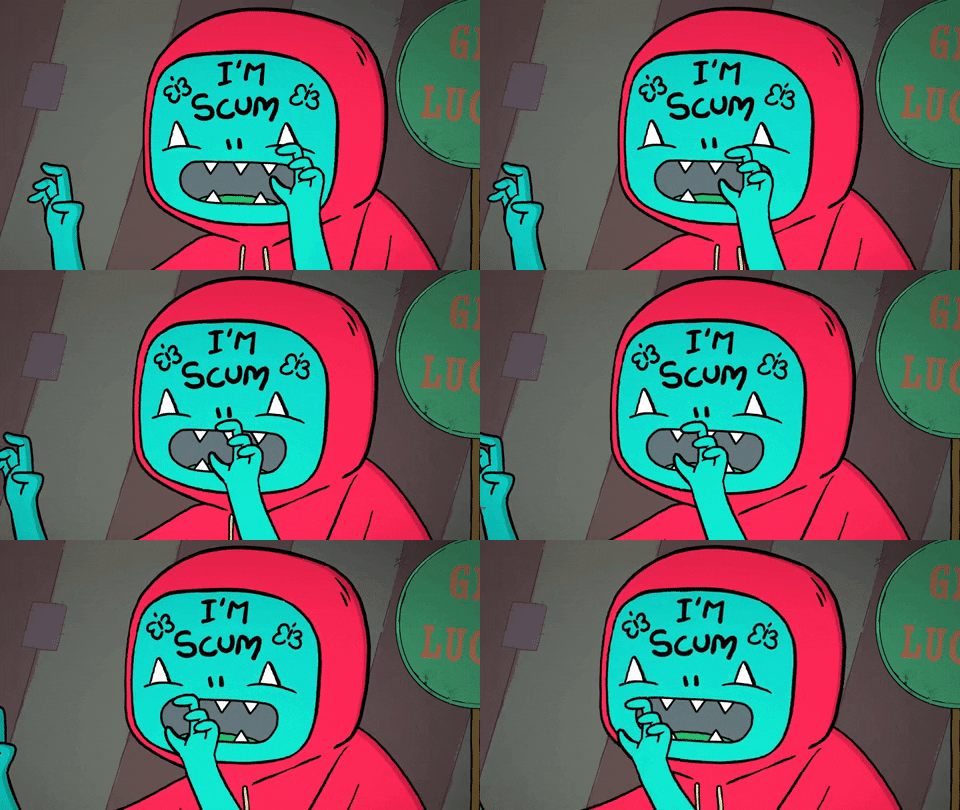
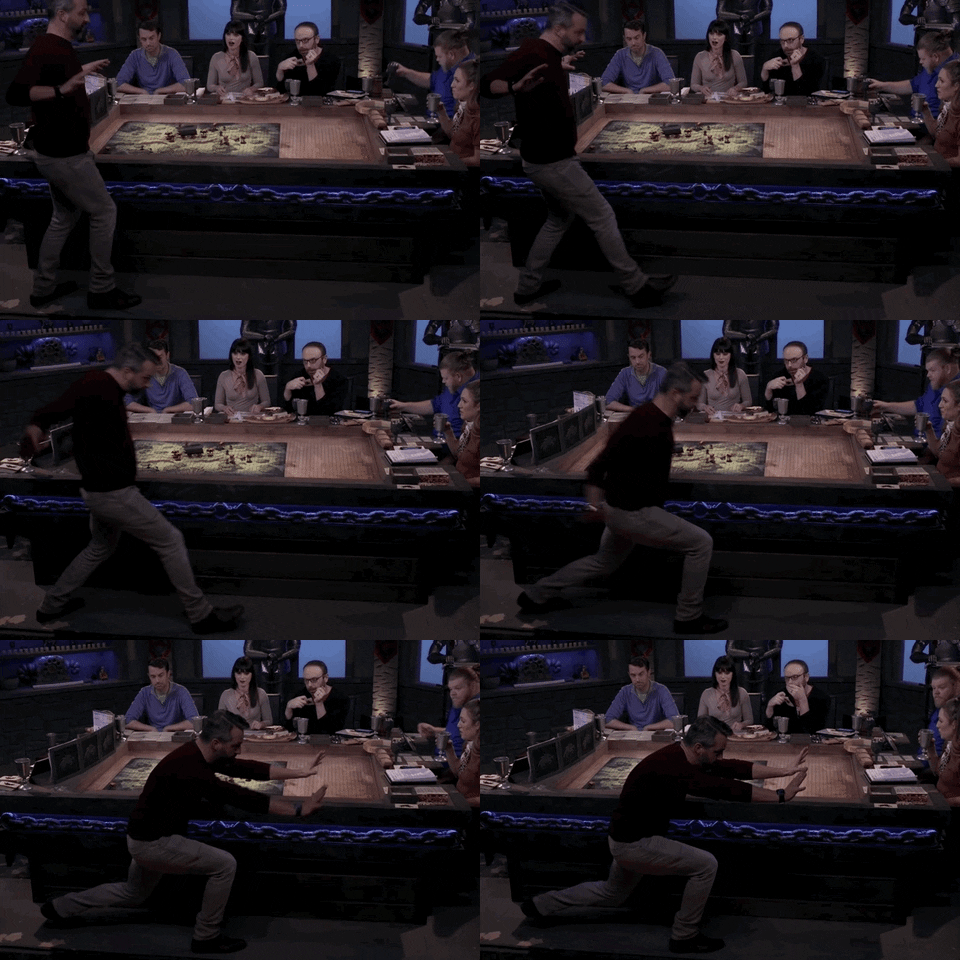
My greasy fingerprints were marring the view of this awesome story i wanted to tell. When I forced a character to do something, forced a moment to feel deep, forced the reader to care — well the results were all kinds of embarrassing. I was the controlling Dungeon Master telling my characters what to do, robbing them of agency, of authenticity, of frankly being believably themselves.
So I realized my job was to be a good parent to these characters, to nurture and feed them and listen and protect them and then get the fuck outta the way.
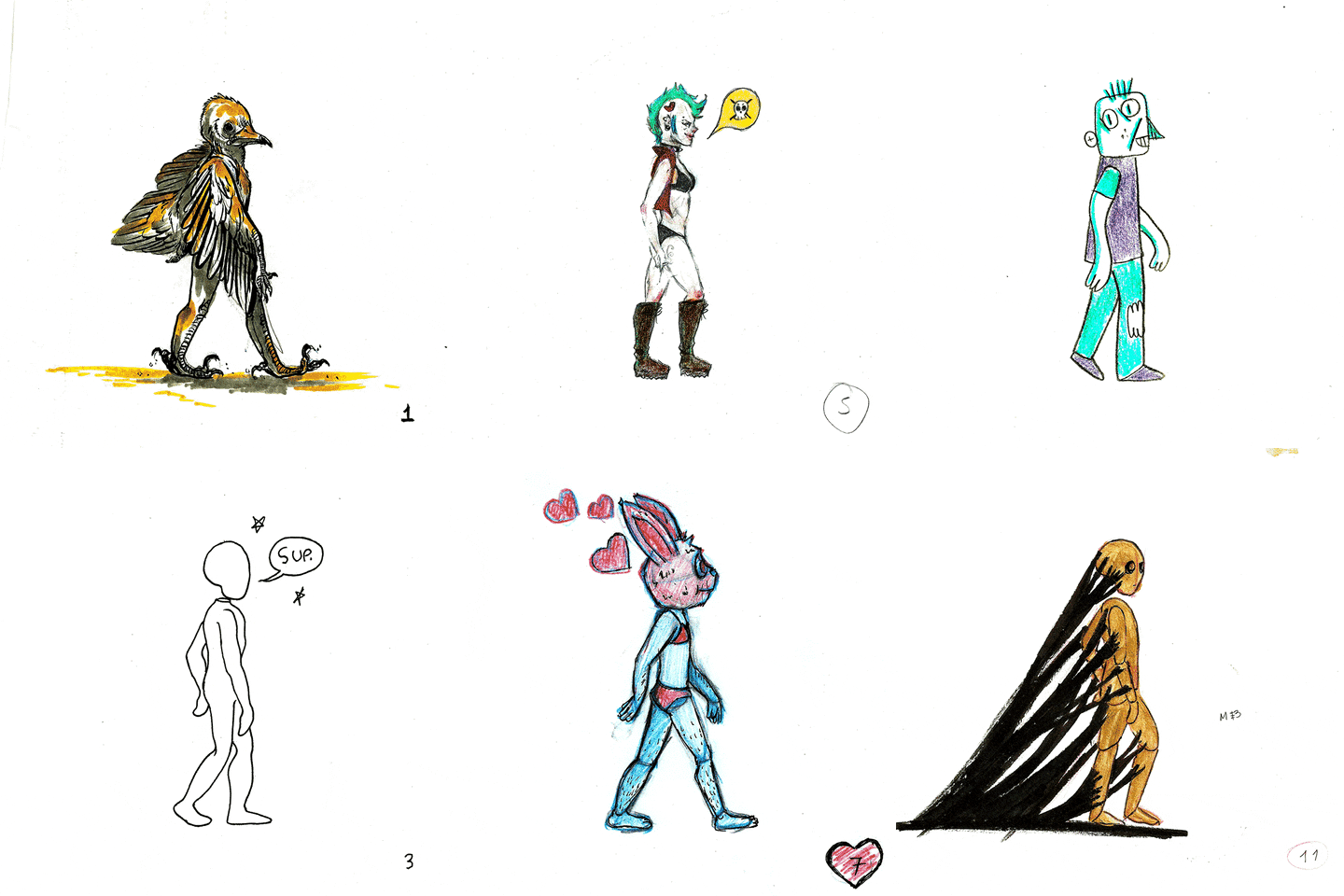
After film school and not getting any traction with my oh-so-“clever” screenplays, I sought the advice of screenwriters who would pound their fist on the dais and say “Story is Character! Character! Character!” over and over again. And i asked these Oscar-winning screenwriters, fully aware that this sounded like a dumb question, but honestly, what do you mean? What is this “character” you keep going on about?
I mean, obviously i know what “a” character is - a human or other life form that makes choices, wears clothes, changes locations, delivers clever dialogue, a magnificently poignant speech every now and again, sometimes juggles or dances or performs athletic sword fights. Sometimes achieves their goals. Sometimes dies. Sometimes gets the girl in the end. But still that didn’t answer my question. What was Character and why was it so important?
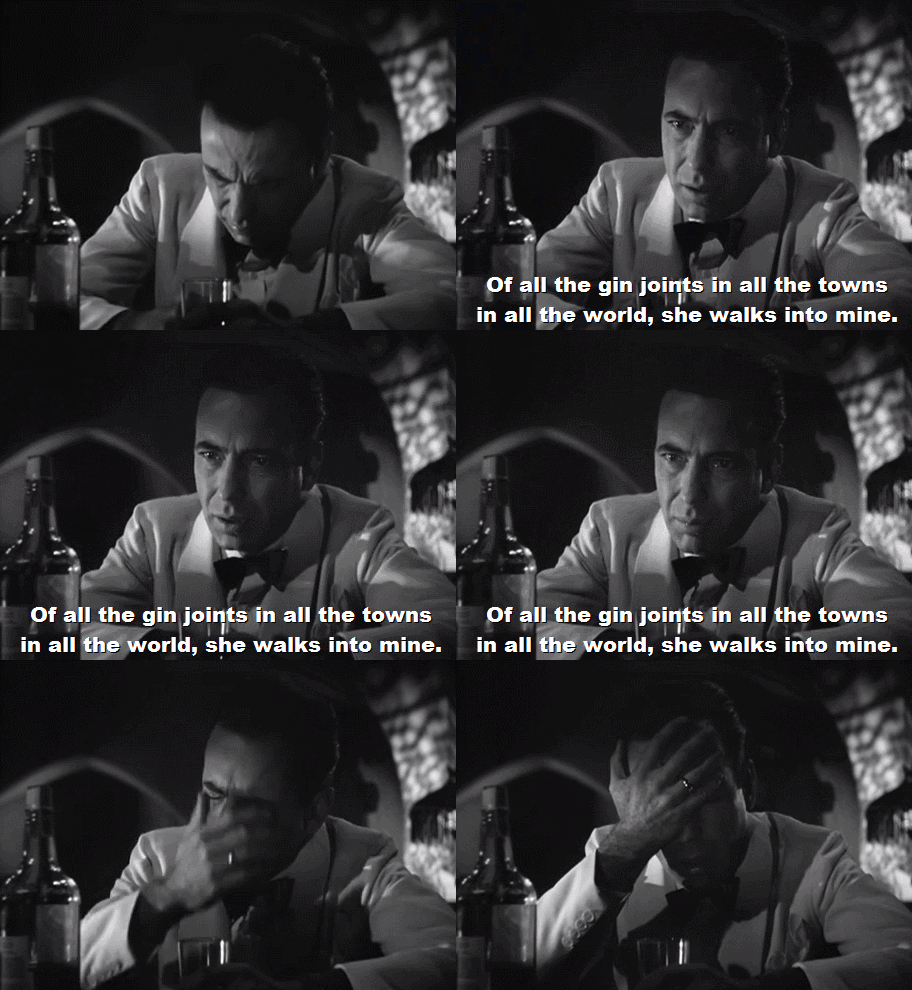
And so my screenplays wore their ignorance of characters on their sleeves. They were all plot, all switcheroos and twists and tough guy dialogue and crazy sidekicks (I held and still hold The Coen Brothers in high regard — but they are terrible role models for neophyte filmmakers because our great takeaway isn’t “wow what subtle craft” but rather “Coen Brothers get to be weird. I wanna be weird. Being weird is good and it’s enough.”) Unlike Jeff “The Dude” Lebowski and Edwina “Ed” McDunnough, my characters, particularly those at the center, were cyphers. Null sets. They were just reacting to the elaborate plot and conflicts and contrivances and what-if scenarios i made up. They were like me: lost and, in a way, asleep.
My stories compulsively wore their ignorance of characters on their sleeves.
Once i learned the fine art of getting out of the way, suddenly the voices began speaking to me and i leaned closer and closer, hearing their whispers, watching them take shape, not trying to change or improve them but just really understand them, in the deepest most empathetic soul-connecting way possible.

And then an interruption: one of my table mates at the Rose Cafe spoke to me.7 Pulling me out of 1840s New York and back to now. He asked if i could watch his laptop while he went to the bathroom. I said yes. He came back, said thanks. I asked if he was a writer. He said yes. I said oh that’s cool. For reasons that remain unclear, I thought he was writing a math book or SAT prep book for Amazon. Maybe if he was at the top of his game, a Complete Dummy’s guide to something, like electrical engineering or boat maintenance. I didn’t think the Rose Cafe could hold more than two budding novelists at a time. I said, is this your first book? He said no, it wasn’t. Now I was intrigued. Clearly this wasn’t his first NaNoWriMo. I asked if he was published. He said yes. I said — good for you! I’m so happy you’ve managed to find success.
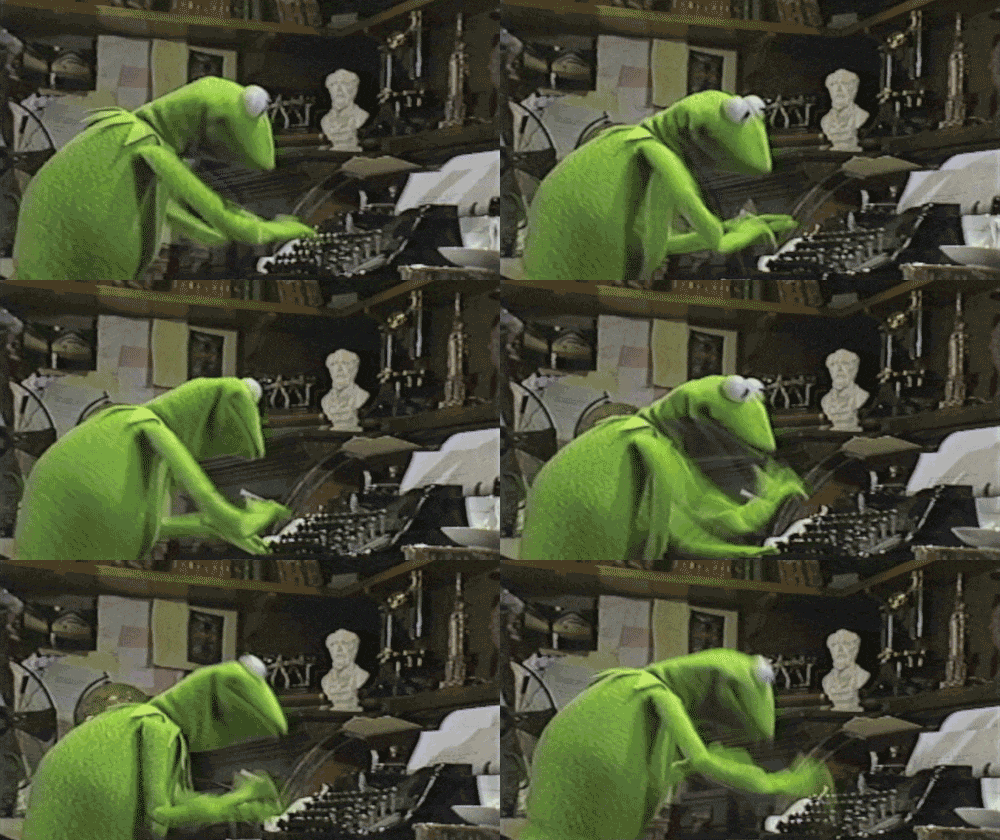
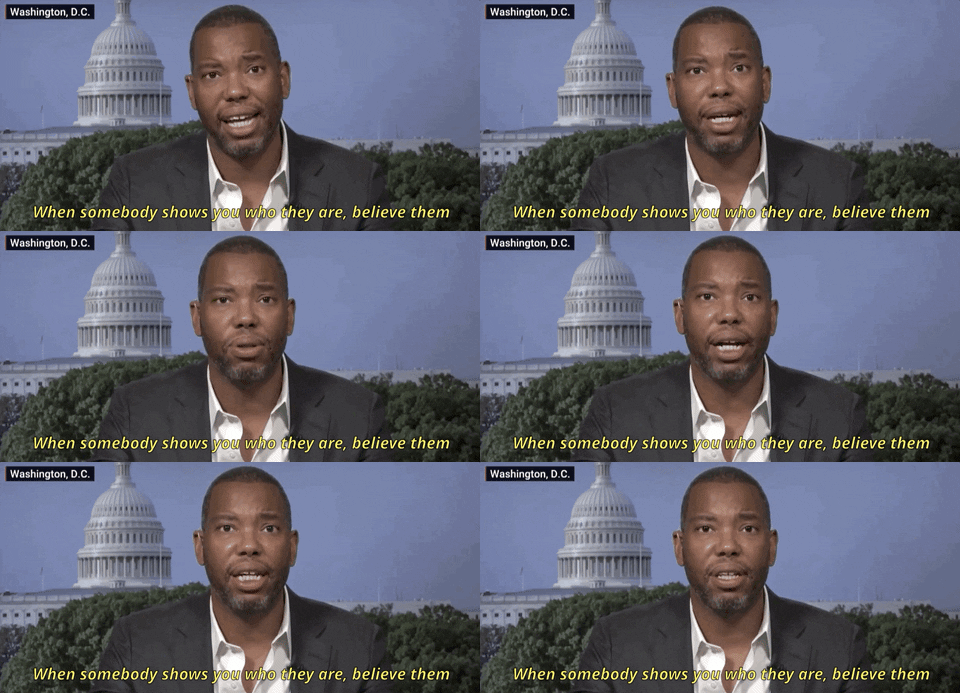
My fingers on the keys, I asked, so what’s your name? I’ll look you up on Amazon. He said his name — a torrent of consonants and vowels in unanticipated locations.8 I said, I’m so sorry, can you spell that out for me? And he said sure, and so i dutifully typed into the Amazon search bar T-A-N-E-H-I-S-I space C-O-A-T … then i stopped, and turned in amazement. “Wait. You’re Ta-Nehisi Coates?” He confirmed. I said “You’re like a real writer.” He confirmed again. “Like a MacArthur Genius type of writer?” I continued, just to make sure I came across as a complete ignoramus. Yes. Anyway, a very cool guy and was very kind to me, someone who didn’t necessarily earn it.9
“Wait. You’re Ta-Nehisi Coates?”
I had just rubbed elbows with someone who had achieved what i wanted most — to earn a living on their stories and words and thoughts. Not because they helped sell a product or some essentially non-essential function in a large corporate behemoth. But because passersby would chip in a nickel into his hat and say thank you for sharing your story, thank you for enriching my world. Your words are worth some of my hard-earned money.
Thank you for reading — somehow at the end of writing this post i feel less lonely, like even if i never get an agent to even agree to read my manuscript (let alone make the colossal career-ending blunder of representing me) that this journey will feel less like a failure and more like an interesting experiment. And once I’m published, i hope i get to go to a terribly fancy cafe and purchase an even more expensive espresso and organic breakfast burrito and ask some new writer to watch my laptop (i assume it will be hovering or translucent by this point in the future) and maybe a bit of writerly fairy dust will rub off on her.
Until then, it’s back to work on my query letter (another thing I thought I knew how to write but clearly have no idea how to!). Will let you know dear reader when an agent bites!
I just saw that NaNoWriMo was shut down last year because of too many AI submissions and apparently a scandal, but there is a new one called, what else, NaNoWriMo 2.0
I’m terrible at genres, but this is as close to what I think the book is. Fantasy, time travel, shape shifting, and lots of teenage angst. What’s not to love?
I get it. Those descriptors could easily be swapped depending on which side of the divide you were on. But the real ones know. #dogtowntillidie.
That’s a story for another time. It’s in the queue, I swear.
RIP, Doug. You’re one of my Rushmore writers.
Do you recall dear reader, as of this writing, how many books I’ve successfully published? The answer rhymes with drear-oh.
That NaNoWriMo sure was a month of expensive paradise — I must have spent hundreds and hundreds of dollars on coffee and top-shelf breakfast burritos and it felt so good.
I don’t know if this is a thing, but my dad and I both have a form of vowel dyslexia. Our worst nightmare is when a Kristen, a Christine, and a Kirsten walk into a bar. Virtually impossible to distinguish.
Though to be clear, I did watch his laptop like a hawk, and that was when i thought he was another NaNoWriMo unpublished schlub like me. #Character.
I'm unsure about the claim of the divide between the kind of storytelling that you've been paid to do/support and the kind that Mr. Coates engages in. Is there really a difference?
I'm interested in your idea of getting out of the way when storytelling. A friend and writing shrink once recommended me "The Artist's Way" by Julia Cameron, which advocates by and large the same practice towards trying to realize our creativity.
Have you read the book? Conception of "getting out of the way" similar to Ms. Cameron?